


Mobile Wastewater Treatment
for Fast Compliance
Why European industries are adopting mobile wastewater treatment for compliance & efficiency
Wastewater treatment is now a strategic priority for European industries, but why? Increasing water scarcity, stricter environmental regulations, and rising operational costs are pushing industrial operators to adopt agile, efficient, and reliable solutions. Mobile wastewater treatment systems are proving to be a critical asset for sectors such as power generation, food & beverage, chemicals, and pulp & paper, delivering flexibility, rapid deployment, and guaranteed compliance where fixed systems fall short.
From meeting stringent environmental requirements to avoiding costly downtimes, mobile solutions are transforming industrial water management across Europe.
Request a free technical assessment today to explore mobile wastewater treatment solutions for your facility.
Contact Us
Key industrial wastewater challenges in Europe
European industries must now address a complex set of challenges, forcing operators to rethink how they handle wastewater. These challenges are intensified by the need to maintain efficiency while controlling costs. Wastewater management is no longer just a compliance task. It is now a core operational priority that requires innovative, flexible, and forward-thinking solutions.
Across Europe, industrial challenges take different forms, from regulatory stringency in Northern and Western Europe to water scarcity and skill shortages in Southern and Eastern regions, yet all require flexible and mobile wastewater treatment approaches.
Business-critical challenges:
These challenges directly impact operations, compliance, and financial performance.
- EU Regulations Driving Stricter Industrial Compliance
The European Union continues to tighten its environmental legislation to reduce industrial pollution and ensure sustainable water management. The Industrial Emissions Directive (IED) sets the framework for controlling industrial emissions to air, water, and soil. Meanwhile, the updated Urban Waste Water Treatment Directive (UWWTD, 2024/3019) introduces stricter discharge limits, monitoring obligations, and sustainability criteria for industrial and municipal wastewater. These directives require industries to implement advanced treatment solutions and adopt circular water practices to remain compliant. - Downtime and Cost Implications for Plant Operations
Operational interruptions remain one of the most significant cost drivers for European industries. According to Siemens’ 2024 industry analysis, unplanned downtime can cost up to $2.3 million per hour in the automotive sector, with heavy industries seeing downtime costs nearly quadruple since 2019. For many facilities, wastewater-related issues such as equipment failures, contamination events, or compliance shutdowns can trigger these disruptions. Mobile wastewater treatment systems offer a flexible solution to mitigate downtime risk while ensuring regulatory compliance and preventing costly regulatory fines. - Water availability: a growing concern across European Facilities
Water scarcity increasingly affects approximately 30% of Europe’s land area annually, with 20% of the territory and 30% of the population experiencing water stress every year. These figures are projected to increase due to environmental challenges, leading to more frequent and severe droughts and floods. (European Environment Agency, 2025). As a result, companies are turning to alternative water strategies, such as wastewater reuse , to ensure a reliable supply of treated water for their core processes.

Operational & infrastructure challenges:
These are structural and long-term challenges that affect a facility’s ability to respond effectively and efficiently.
- Skill gaps & workforce shortages in operations:
According to a report published by UNECE (United Nations Economic Commission for Europe) in June 2025, the water sector is facing a significant shortage of qualified professionals. The report highlights an aging workforce, low attractiveness of water-related jobs for young professionals, and a misalignment between university curricula and labor market needs. On average, national water resource departments in the countries involved in the EU4Environment project are currently 35% below the staffing levels needed to carry out their mandates. - Infrastructure limitations and space constraints:
Many industrial wastewater treatment plants are designed for fixed capacities and cannot easily adapt to variations in flow or wastewater quality. This infrastructural rigidity can limit the ability to respond quickly to emergencies or regulatory changes, making mobile treatment solutions a practical alternative.
Mobile wastewater treatment as a strategic solution
After identifying the key challenges faced by industry professionals, mobile wastewater treatment emerges as a strategic solution to ensure uninterrupted business flow and regulatory compliance. European plant operators, sustainability managers, and project managers are increasingly turning to mobile wastewater treatment systems that combine agility and adaptability.
How temporary mobile wastewater treatment works
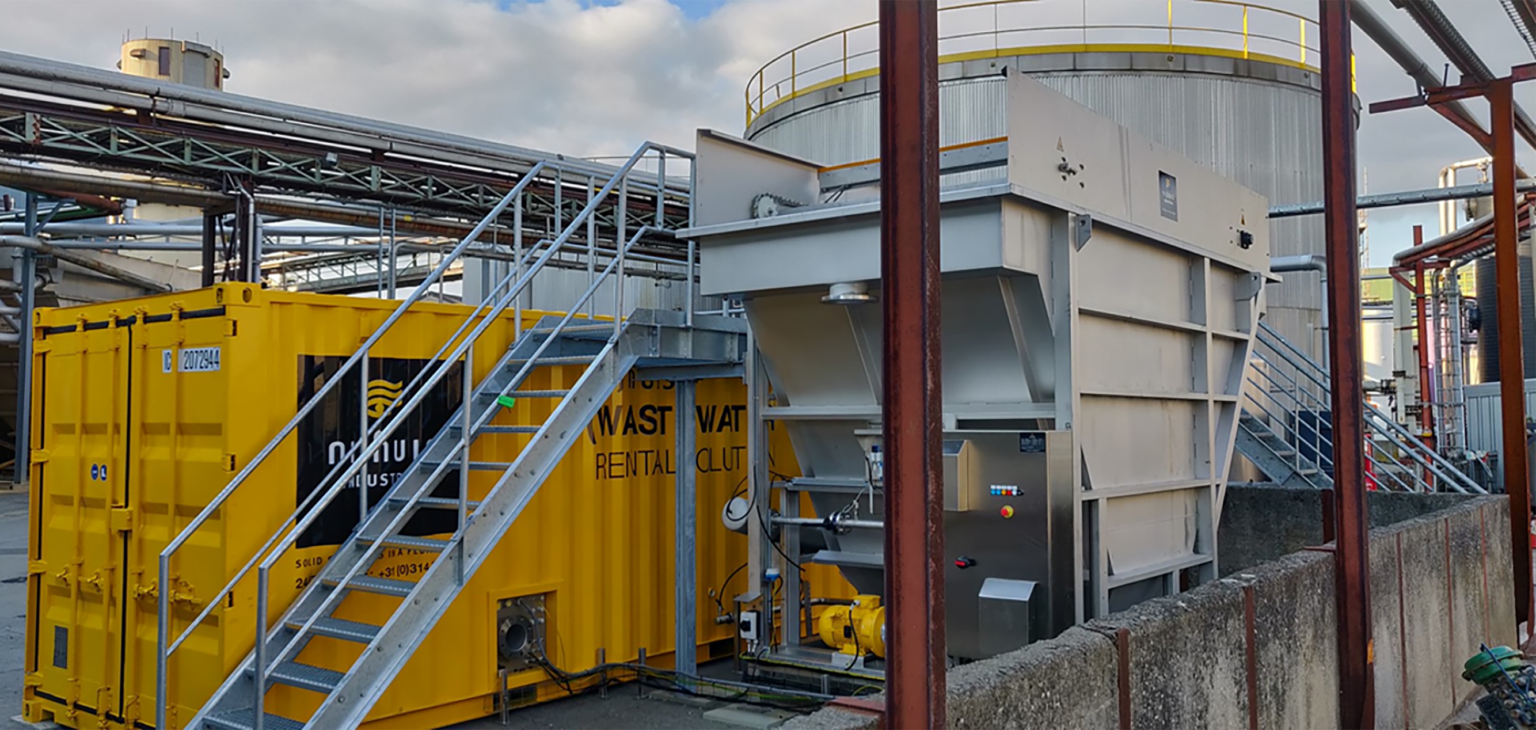
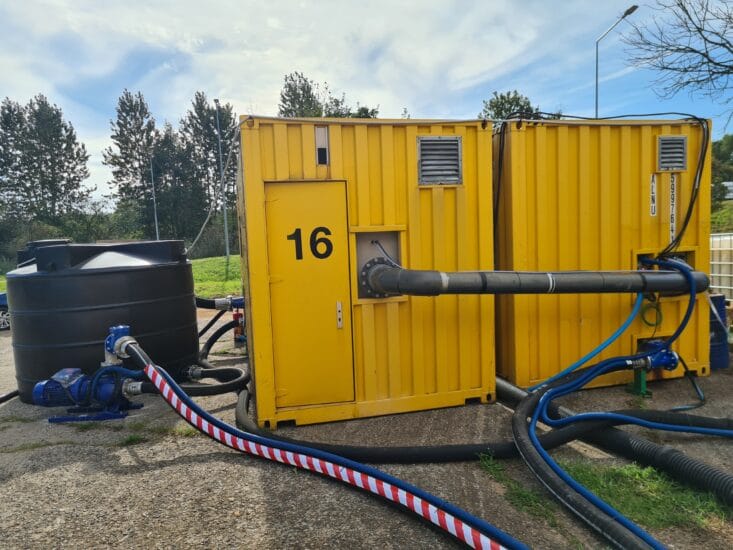
These transportable units are installed on trailers, containers, or skids. They are designed to treat industrial wastewater on-site without the need for costly new infrastructure. These systems can be deployed quickly and scaled according to operational needs, offering a flexible alternative to traditional fixed facilities.
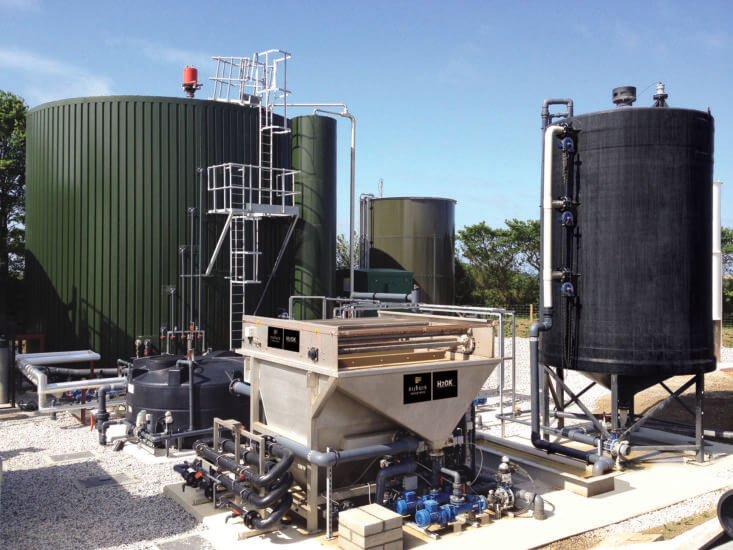
They integrate advanced processes such as biological treatment, dissolved air flotation (DAF), Ultrafiltration (UF), membrane filtration, chemical dosing, and sludge management to meet stringent discharge requirements. Furthermore, this flexibility allows industries to respond rapidly to emergencies and adapt to production changes without major capital investments or delays.
Case Study: Rapid intervention in the Food & Beverage sector, Southern Europe
A leading Spanish company in the Food & Beverage sector contacted Mobile Water Solutions in an emergency caused by issues at their wastewater treatment plant. They needed to reduce hydraulic flow and total suspended solids (TSS) entering their biological treatment plant (anaerobic + aerobic).
To address this, Mobile Water Solutions mobilised a mobile dissolved air flotation (DAF) unit to remove about 80–85% of TSS as the first step. Pre-treated water was then filtered through multi-media filtration and reverse osmosis, enabling partial reuse.
Following a successful 8-week deployment, the customer extended the service from an emergency intervention to a 12-month planned contract.
Why Mobile Water Solutions matter for European industries
For sectors such as power generation, food and beverage, chemicals, and pulp and paper, mobile wastewater treatment delivers clear strategic advantages. These systems enable rapid deployment to maintain operations, ensure compliance, prevent fines, and limit environmental impact.
Key Benefits:
- Operational continuity: minimize downtime and safeguard productivity.
- Compliance assurance: meet EU regulatory standards consistently and penalties.
- Cost efficiency: avoid large capital expenditures (CAPEX).
- Environmental sustainability: reduce freshwater consumption and improve discharge quality.
- Flexibility and scalability: adapt quickly to changing production needs across sectors.
Conclusion
Mobile Water Solutions, part of Nijhuis Saur Industries (NSI), offers a strategic approach to water and wastewater management. With one of the largest mobile fleets, numerous depots, and a dedicated team across Europe, Mobile Water Solutions is the partner of choice for industrial plant operators seeking to leverage the expertise of NSI in wastewater treatment.
By embracing mobile wastewater treatment and reuse technologies, companies can ensure compliance, maintain operational continuity, and reduce freshwater consumption and environmental impact.
Contact our team today to discuss your mobile wastewater treatment needs.
Hable con un experto FAQs
How quickly can a mobile wastewater treatment system be deployed?
Deployment time depends on system size, treatment complexity, and site conditions, but most mobile wastewater units can be delivered and installed within days to a few weeks. Once connected and commissioned, they provide a fast, flexible solution for maintaining operations during maintenance, emergencies, or planned upgrades.
Can mobile wastewater treatment systems be used for long-term projects?
Yes. While often used for temporary or emergency needs, mobile wastewater systems can also support long-term operations over months or even years. They offer a flexible, pay as you go alternative to permanent infrastructure, ideal for sites seeking reliable performance without major capital investment.
What industries benefit most from mobile wastewater treatment?
Sectors such as power generation, food & beverage, chemicals, pulp & paper, mining, and events facilities gain significant advantages due to flexibility, compliance assurance, and fast deployment.
How do mobile wastewater solutions support sustainability goals?
They can help reduce freshwater consumption, improve discharge quality, and enable water reuse, while supporting companies in meeting their circular economy and broader sustainability objectives.
Are mobile wastewater treatment systems customizable?
Yes, mobile systems can be customized to match each site’s water quality requirements, regulatory standards, and fluctuations in production load.
How do mobile units handle sudden changes in wastewater volume or quality?
These systems are built for operational flexibility, with modular process trains and scalable treatment capacity that can be adjusted to manage variations in flow rate and contaminant load.
Are mobile wastewater solutions cost-effective compared to fixed installations?
Often, yes. Mobile solutions help avoid large upfront capital costs, minimize downtime expenses, and can be rented only when needed, offering a flexible, OPEX-based alternative to permanent infrastructure.
How is treated water reused in industrial applications?
Treated water can be reused for cooling, cleaning, process operations, or irrigation, or safely discharged in compliance with regulations, depending on quality requirements.