

Don't Let Water Disrupt Your Operations:
Ensure Business Continuity
Business Continuity in Industrial Water Management: How to Minimize Disruptions
Business continuity in industrial water management depends on a reliable and continuous supply of high-quality water. For plant managers, maintaining uninterrupted operations and smooth manufacturing processes is of utmost importance, as water is essential for many key steps in plant operations, such as boiler feed, cooling systems, cleaning, rinsing, and product formulation.
Unfortunately, unexpected events such as seasonal shortages, equipment failures, contamination events, or planned maintenance may quickly impact production. In these moments, rapid intervention with mobile water and wastewater treatment solutions and services provides the flexibility needed to maintain operations, bridge supply gaps, and even prevent costly downtime.
This guide outlines how to build a resilient approach to industrial water management, including how to design an industrial water continuity plan that reduces operational risks, safeguards assets, and ensures environmental and regulatory compliance.
Contact your local team to discuss your project
Talk to an expert
The True Cost of Water Disruptions for Industrial Operations
When water supply stops, the impact on business can be immediate and severe. According to Aberdeen Group, unplanned downtime can cost up to €250,000 per hour, making downtime prevention and risk mitigation top priorities across water-intensive industries.
Disruptions can halt operations, compromise product quality if water volume or purity is affected and put environmental compliance at risk. Non-compliance may result in fines, enforced shutdowns, or reputational damage, amplifying financial and operational losses. Critical equipment such as boilers and cooling towers can also be damaged, leading to higher repair costs.
A reliable industrial water continuity plan enables companies to respond effectively to unexpected events while maintaining production efficiency, quality standards, and regulatory compliance.
5 Threats to Continuous Water Supply and How to Mitigate Risks
For industries that depend on a continuous and reliable water supply, disruptions can occur suddenly and often without warning. Understanding the potential causes is key to effective risk mitigation.
Each threat can pause critical operations, and plant managers must act quickly to maintain operations and protect their facility.
Threat #1: Natural disasters and climate events
Water scarcity affects approximately 30% of the EU’s territory annually, creating immediate risks to industrial water supply and operations (European Environment Agency, 2025). Extreme weather events such as droughts, floods, storms, and freezing conditions can further disrupt water availability and damage infrastructure.
Threat #2: Infrastructure failure
Aging water infrastructure, including pipes, pumps, valves, and treatment systems, is a growing vulnerability. While EU-wide statistics for industrial facilities are limited, industry reports indicate that unplanned infrastructure issues such as mechanical failure, corrosion, or unforeseen breakdowns in key components can disrupt flow, affect water pressure, and compromise water quality, frequently causing temporary interruptions to plant operations
Threat #3: Contamination events
Sudden changes in raw water quality, due to industrial chemical spills, agricultural runoffs, or natural contaminants, can render water unsafe for industrial processes. Contaminated water can damage equipment, compromise product quality, or violate discharge permits. EU regulations emphasize strict monitoring and rapid response, highlighting the operational risks posed by such events.
Threat #4: Planned maintenance
Scheduled maintenance of facility-owned or municipal systems can temporarily restrict water supply. Without proper coordination or backup solutions, even planned outages can impact production schedules. Industry guidance recommends having backup options such as mobile water solutions in place to ensure uninterrupted operations.
Threat #5: Regulatory constraints
Evolving regulations can limit industrial water use. The European Commission has set an EU-wide target to improve water efficiency by at least 10% by 2030, encouraging Member States to define their own targets (European Environment Agency, 2025). New compliance requirements may affect water withdrawal, wastewater treatment, and operational planning, making proactive continuity strategies essential.
How Water Operations Support Business Continuity in Industry
Business continuity refers to an organization’s ability to maintain essential operations during – and recover quickly after – unexpected disruptions. In the context of manufacturing and plant industries, this means ensuring that critical processes, utilities, and systems continue running smoothly, even when external or internal challenges arise.
Strategies might include backup water treatment systems, emergency water supply agreements, and modular wastewater treatment units that can be deployed quickly.
The industries introduce risk mitigation and resilience tactics with a goal to maintain operational stability, protect revenue, and ensure that critical infrastructure can adapt to supply challenges without compromising safety, quality, or environmental standards.
Business Continuity vs Disaster Recovery: What’s the Difference?
While often used interchangeably, business continuity and disaster recovery serve distinct yet complementary roles.
Disaster recovery refers to the steps taken after a disruption to restore normal operations. In the context of water and wastewater treatment, this might involve emergency repairs or sourcing temporary treatment solutions after an equipment failure or environmental incident. Disaster recovery is reactive and, while necessary, often results in costly downtime and lost output.
Business continuity, on the other hand, is a proactive strategy that ensures critical treatment processes remain operational during unforeseen events. This includes planning for mobile water treatment support, redundancy, and rapid deployment. With mobile water and wastewater systems ready to deploy, clients can continue meeting water quality standards, avoid production delays, and maintain environmental compliance without interruption.
While disaster recovery gets you back on track, a proactive continuity strategy ensures uninterrupted operations. In water-intensive industries, such as power, petrochemical, food and beverage, and pulp and paper, business continuity is generally more effective and more economical in the long term.
Why Water Supply Reliability Matters for Plant Operations
Even short disruptions can have major consequences. Facilities running 24/7 risk delayed schedules, compromised product quality, regulatory violations, and equipment damage.
A comprehensive water continuity plan allows companies to respond effectively while maintaining production efficiency and compliance.
Reason #1 – Continuous 24/7 Operations
Facilities often run 24/7. Unplanned stops can derail production schedules, delay deliveries, and require costly restart procedures.
Reason #2 – High Product Volumes
Even a brief shutdown affects large product volumes, magnifying financial losses by the minute.
Reason #3 – Maintaining Water Quality
If water quality drops or supply stops, processes can become non-compliant or unsafe.
Reason #4 – Environmental Compliance
Plants must meet environmental discharge limits. Failures in wastewater treatment can lead to violations, fines, or even shutdown orders.
Reason #5 – Equipment Protection
Boilers, heat exchangers, and cooling towers depend on consistent water quality. If water is lost or contaminated, damage to equipment can occur, leading to expensive repairs and longer downtimes.
5 Business Payoffs of Water Continuity
Securing an industrial water continuity plan helps companies maintain uninterrupted production in water-intensive industries, reducing the risk of operational stoppages and financial losses (European Environment Agency, 2025). Reliable water management extends equipment life by minimizing scaling, wear, and overheating, while ensuring consistent product quality in regulated sectors. It also supports compliance with environmental standards and enables more efficient water use, improving overall operational performance.
Adopting a water continuity plan for industry delivers long-term value. Below are five key benefits that safeguard plant operations, manufacturing performance, and bottom-line results.
Benefit #1 – Uninterrupted Operations
A steady water supply ensures that industrial processes can continue without interruptions, avoiding costly downtime in manufacturing plants.
Benefit #2 – Equipment Longevity
Ensuring a continuous flow helps protect machines from overheating, scaling, and premature wear, reducing breakdowns and extending the lifespan of critical infrastructure.
Benefit #3 – Consistent Product Quality
Consistency in water supply helps maintain quality across production batches. This is particularly critical in regulated sectors like food, pharmaceuticals, and chemicals, where water purity and flow stability directly impact product integrity.
Benefit #4 – Environmental Compliance
A reliable water system helps your facility meet environmental standards, operate treatment plants efficiently, and avoid accidental overflows or pollution events.
Benefit #5 – Operational and Cost Efficiency
Water continuity allows your plant to run more efficiently, reducing energy waste, emergency maintenance, and downtime. With better control over processes and fewer interruptions, operations become leaner, more predictable, and cost-effective.
By ensuring a steady water supply, facilities can avoid production losses, protect equipment, meet environmental obligations, and reduce downtime risks.
How to Build an Effective Business Continuity Plan
A comprehensive industrial water continuity plan ensures that your plant can maintain essential functions during unexpected events. When it comes to water-related risks, there are several smart steps companies can take to strengthen resilience:
Step 1 – Water risk assessment
Identify vulnerable points in water supply and infrastructure. Analyze single-source dependencies, aging equipment, and seasonal variability, and assess the potential impact of disruptions.
Step 2 – System Maintenance and Testing
Regularly maintain and test water and wastewater treatment systems to ensure continuous performance, especially during emergencies. Preventative care reduces the risk of failure when reliable water is critical.
Step 3 – Emergency Protocols and Team Training
Prepare your team for rapid response in the event of a water-related challenge. Define clear roles, escalation pathways, and run simulations to ensure an effective emergency water response.
Step 4 – Flexible Backup Solutions
Integrate mobile water and wastewater systems that can be deployed quickly when permanent infrastructure is unavailable. Flexible mobile water services allow operations to continue without interruption, minimizing downtime and protecting assets.
ReAct Plan: Your Customized Treated Water Security Strategy
Mobile Water Solutions offers the ReAct Treated Water Security Plan, designed to give industrial businesses the confidence that operations can continue, even during unexpected water supply challenges.
Joining ReAct is quick, simple, and completely free of charge. During registration, we collect essential site data such as flow rate, pressure, water quality, and connection types. This allows us to pre-select the right equipment and agree on response protocols in advance.
When the unexpected happens, deployment is immediate: no delays, no guesswork, just a ready-to-go water continuity solution.
Boost the resilience of your operations with ReAct Plan
Download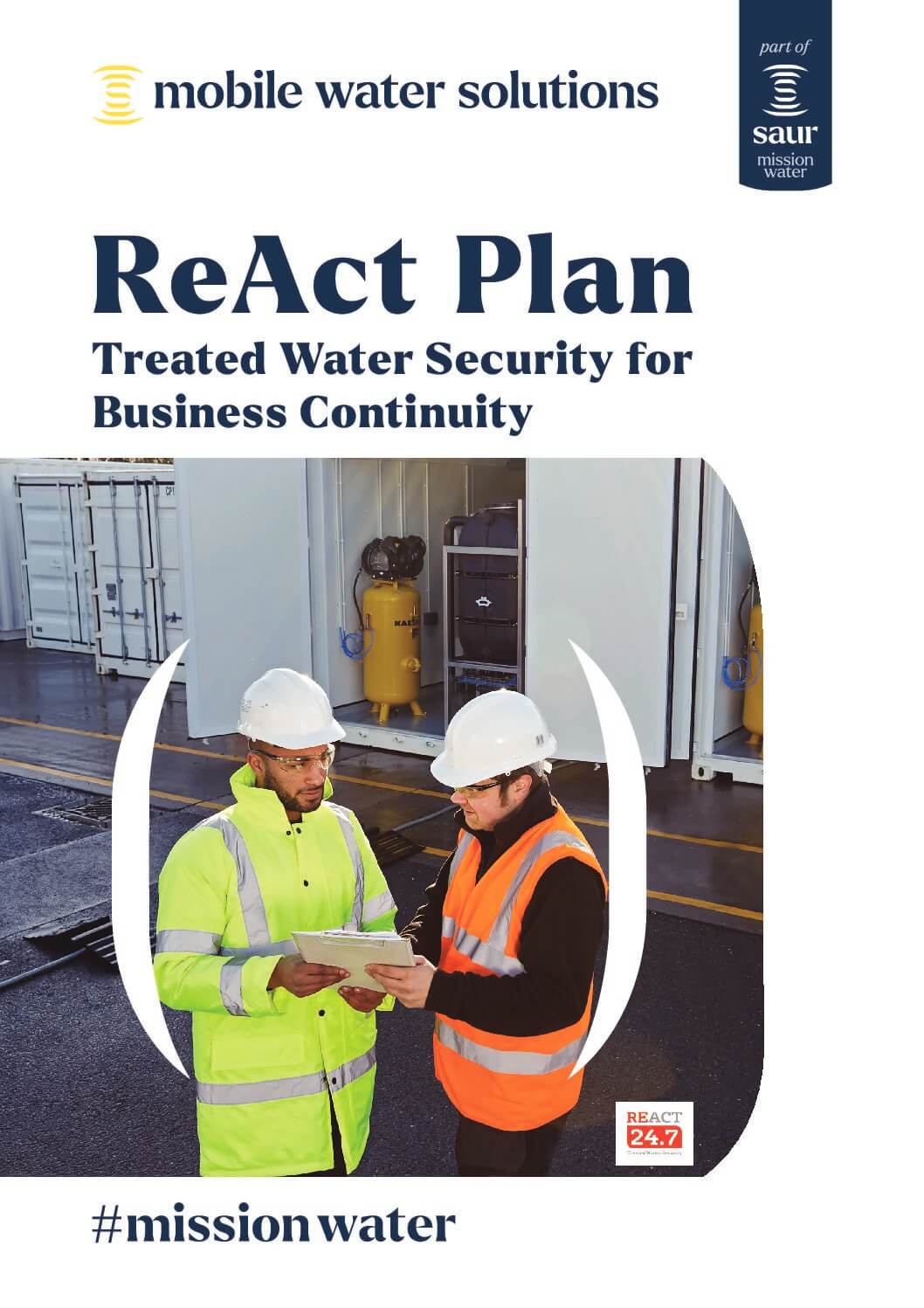
Ensure Uninterrupted Supply with Mobile Water Solutions
When unforeseen failures or maintenance-related shutdowns threaten your water infrastructure, Mobile Water Solutions delivers fast business continuity and compliance through mobile water and wastewater treatment services. Our plug-and-play units can often be deployed within hours to secure process water, treat wastewater, and enable water reuse, ensuring uninterrupted business flow.
Scalable industrial water solutions:
Modular units from 1 m³/h to over 1,000 m³/h, available on trailers, skids, or containers, ensuring a reliable water supply and rapid integration.
OPEX-friendly water services:
Emergency, short-term (Planned), or long-term (Multi-year) options, designed as Opex-based models for cost efficiency.
Expert support for risk mitigation:
25+ years of expertise in industrial water treatment, providing trusted guidance, regulatory compliance, and effective contingency planning.
Let’s Discuss Your Water Continuity Needs
Whether you’re facing an emergency, preparing for planned maintenance or putting a full continuity strategy in place, Mobile Water Solutions can support you with reliable, on-demand water and wastewater treatment. With 8 depots strategically located across Europe, our plug-and-play systems can be deployed in as little as 4 hours, depending on your site location.
Contact us today to discuss your site’s needs or register for our ReAct “Treated Water Security Plan” to get priority emergency coverage.
Contact your local team to discuss your project
talk to an expert Frequently Asked Questions (FAQs)
What is business continuity in industrial water and wastewater management?
Business continuity ensures critical water and wastewater processes remain operational during disruptions, avoiding production losses.
How can mobile water solutions minimize downtime?
Mobile treatment units provide temporary water supply during emergencies or maintenance, keeping operations running smoothly.
Which industrial sectors benefit most from water continuity planning?
Industries like power, petrochemical, pulp & paper, food & beverage, and manufacturing rely heavily on water and wastewater systems.
What is the difference between business continuity and disaster recovery?
Business continuity is proactive, ensuring systems stay online. Disaster recovery is reactive, restoring operations after a disruption.
Can water reuse be part of a continuity plan?
Yes. Reuse reduces dependence on freshwater, cuts costs, and strengthens resilience against supply disruptions.
How can industrial plants implement a water continuity plan quickly?
By assessing risks, training teams, and integrating Mobile Water Solutions like the ReAct Plan, which can be deployed in hours to prevent downtime.